Us and Canada Reach Last‑minute Deal to Pause 50% Tariffs on $20 billion of Canadian Goods
August 22, 2026 | by David Chen
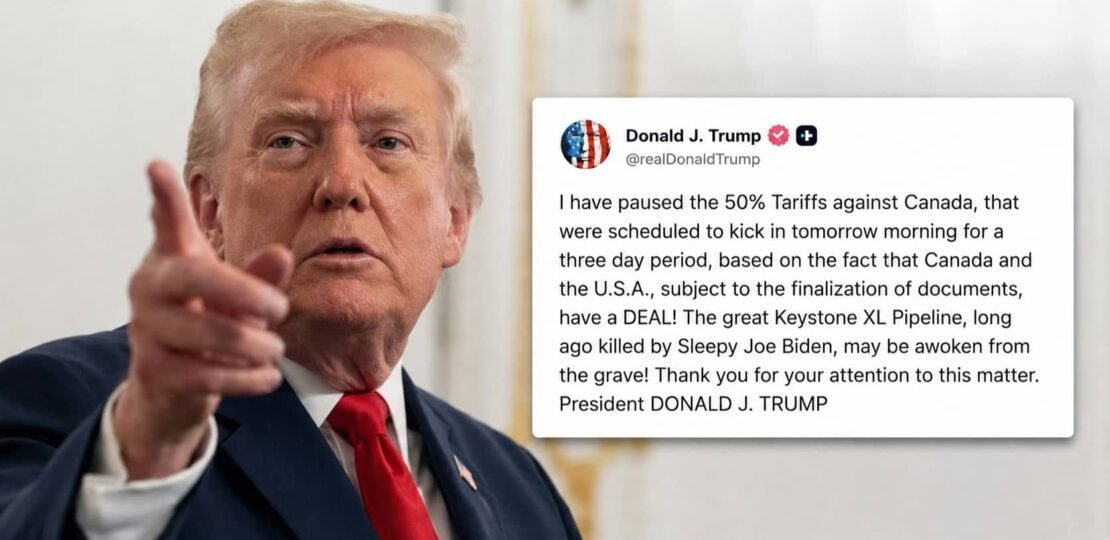
In a late‑night post on his social‑media platform, President Donald Trump revealed that the United States and Canada have struck a last‑minute agreement to postpone a 50% tariff on a swath of Canadian imports worth roughly $20 billion. The move comes just hours before the sanctions were set to take effect, averting an immediate escalation in trade tensions between the two neighbours.
The announcement signals a brief cooling‑off period, giving negotiators a window to iron out the finer points of a longer‑term trade framework. Both governments described the deal as a pragmatic step to keep the historic partnership on steady ground.
Details
- Tariff rate: 50% on selected Canadian goods.
- Value of affected imports: approximately $20 billion.
- Implementation delay: the tariff is postponed for an undefined period, pending further negotiations.
- Timing: agreement reached hours before the sanctions were to be enforced.
- Objective: to prevent immediate economic strain and open a dialogue for a comprehensive trade solution.
Quotes
President Donald Trump stated that the decision to delay the tariffs was intended to “buy time for more negotiations” and to avoid adding another layer of strain to the already tense relations between the United States and Canada.
Background
Trade relations between the United States and Canada have long been a cornerstone of North American economics, with both nations sharing a border that supports the flow of billions of dollars in goods each year. Earlier this year, the U.S. administration announced a series of punitive measures targeting Canadian imports, citing concerns over market access and regulatory standards. The proposed 50% tariff would have marked one of the steepest increases in recent memory, threatening sectors ranging from agriculture to automotive parts.
Canadian officials responded with a series of counter‑measures, warning that such a steep tariff could ripple through supply chains and raise consumer prices on both sides of the border. The escalating rhetoric raised alarms among industry groups, who feared a trade war could undermine the integrated market that has benefited both economies for decades.
Conclusion
The last‑minute deal to delay the tariffs offers a breathing space for both capitals to negotiate a more sustainable arrangement. While the postponement does not resolve the underlying disputes, it prevents an immediate shock to businesses and consumers. Analysts suggest that the window created by this pause could be pivotal in shaping a new trade agenda that balances protectionist pressures with the economic interdependence that defines the U.S.–Canada relationship.
Stakeholders on both sides will be watching closely as talks resume, aware that the outcome could set a precedent for how North American trade disagreements are managed in an increasingly protection‑focused global climate.

RELATED POSTS
View all


Uproar at Delhi’s Khan Market After Signboards Removed in Civic Body Drive
August 14, 2026 | by Vikram Chauhan

Rs 1.27 Crore for Mumbai Police’s Mounted Unit
August 22, 2026 | by Vikram Chauhan