


Trump Posts Ai Image Claiming Strait of Hormuz as New U.s. Territory Amid Rising Iran Tensions
August 22, 2026 | by Aaditya Raj
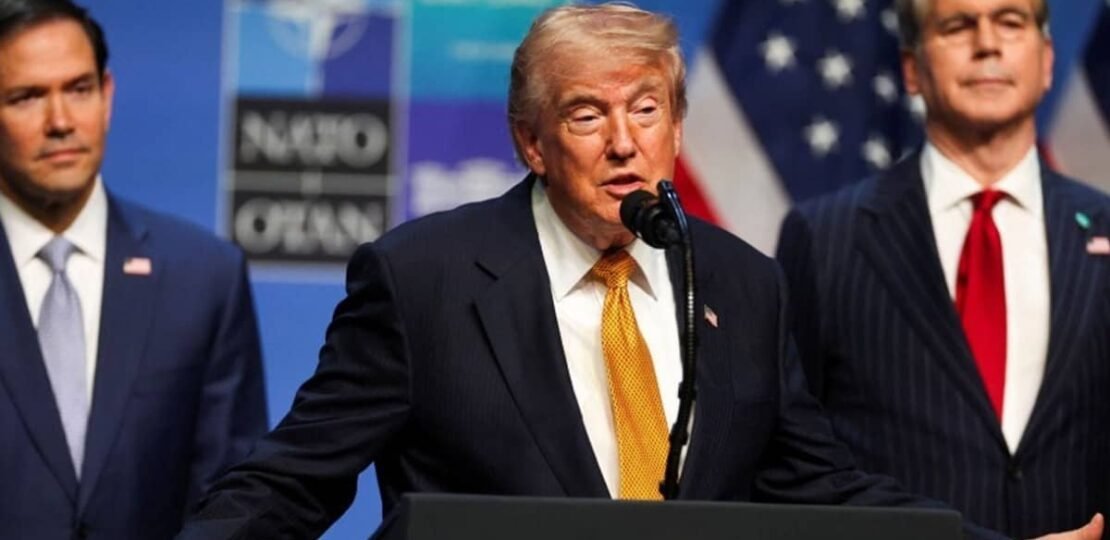
In a bold digital stunt, former President Donald Trump posted an artificial‑intelligence created picture that brands the Strait of Hormuz—a narrow waterway through which a fifth of the world’s oil passes—as “New U.S. Territory.” The image, shared on his personal platform on Tuesday, arrived as diplomatic friction between Washington and Tehran intensified over control of the crucial passage.
Details
The AI‑generated illustration shows a stylised map of the Gulf, with the strait highlighted in bright colors and a caption declaring it part of the United States. The post was accompanied by a terse message reaffirming Trump’s earlier assertions of American dominance over the waterway.
- Trump’s post used AI to create a visual claim over the Strait of Hormuz.
- Iran’s foreign ministry publicly dismissed the notion, labeling it unfounded.
- Tehran warned it would keep the strait closed until its conditions are satisfied.
- The strait remains a chokepoint for roughly 20% of global petroleum shipments.
Quotes
No official spokesperson provided a comment at the time of publishing, and no verified statements from either government were attached to the image.
Background
The Strait of Hormuz, a 21‑mile-wide channel between Oman and Iran, has long been a flashpoint in U.S.–Iran relations. In 2019, attacks on tankers prompted the United States to increase its naval presence, a move Tehran condemned as an infringement on its sovereignty. Over the years, both sides have exchanged threats over the strait’s security, with the United States routinely asserting the right to ensure free navigation.
Artificial intelligence tools have become a new weapon in political messaging, allowing leaders to produce hyper‑realistic visuals without the need for actual photographs. Trump’s use of such technology follows a series of digitally enhanced posts that have drawn both praise from supporters and criticism for blurring the line between fact and fabrication.
Iran’s rejection of the claim aligns with its longstanding policy of defending the strait’s status as an Iranian‑controlled waterway. Iranian officials have repeatedly warned that any attempt to undermine their authority could trigger a closure, which would have severe repercussions for global oil markets.
The timing of the post coincides with a series of diplomatic talks in the region, where both sides are negotiating over sanctions relief and the release of detained nationals. Analysts suggest the image may be intended to pressure Tehran ahead of upcoming negotiations.
Conclusion
The AI‑crafted illustration underscores how digital media can amplify geopolitical posturing. While the image carries no legal weight, its circulation fuels already volatile rhetoric surrounding the Strait of Hormuz. If Tehran follows through on its vow to keep the passage closed, oil prices could spike, affecting economies far beyond the Middle East.
Observers say the episode highlights the need for clearer verification mechanisms for AI‑generated content, especially when it touches on sensitive international issues. As diplomatic channels continue to work toward de‑escalation, the world will be watching whether symbolic gestures like Trump’s image translate into concrete policy shifts or remain confined to the realm of online spectacle.

RELATED POSTS
View all

Asia’s Premier News Agency – India News, Business & Political, National & International, Bol…
August 30, 2026 | by Vikram Chauhan
Samsung Galaxy Z Fold 8 Ultra से कितना अलग है Google Pixel 11 Pro Fold?
August 14, 2026 | by David Chen
The Odyssey Movie Review | (5/5 स्टार) 3000 साल पुराने महाकाव्य को पर्दे पर उतार Christopher…
August 25, 2026 | by Vikram Chauhan