


Trump Announces Last‑minute Deal to Pause 50% U.s. Tariffs on Canadian Goods
August 24, 2026 | by Anjali Deshmukh
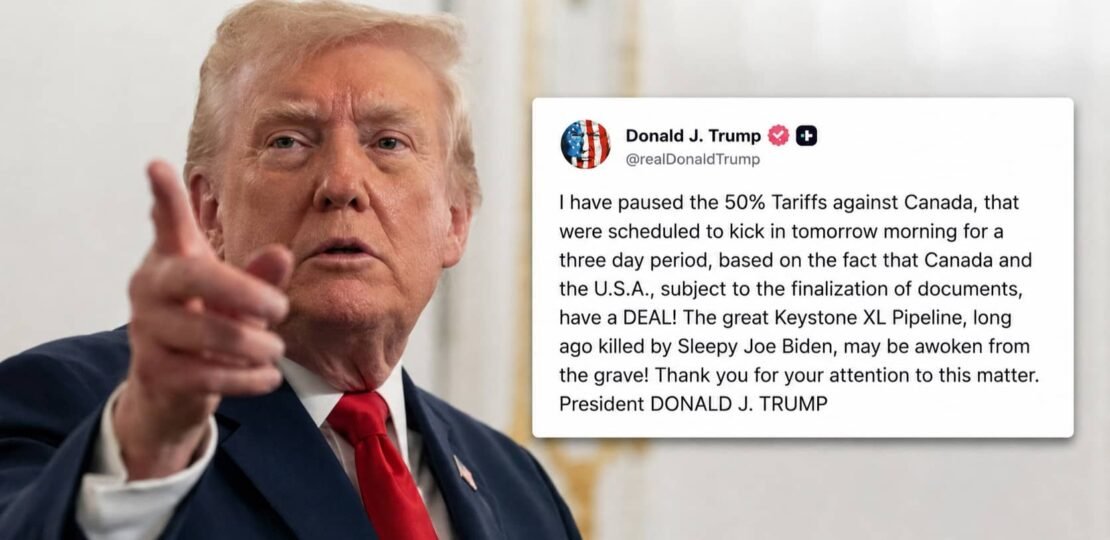
In a late‑night post that lit up his social feed, President Donald Trump declared a sudden breakthrough with Canada: the United States will hold off on imposing 50% tariffs on roughly $20 billion worth of Canadian imports. The announcement came just hours before the punitive measures were set to take effect, turning a looming trade showdown into a temporary reprieve.
Trump’s message framed the deal as a “last‑minute” effort to keep the historic partnership from sliding into open conflict. By delaying the steep duties, both governments gain breathing room to hash out a longer‑term solution without the immediate pain of a tariff shock.
Details
- Tariff rate postponed: 50% on selected Canadian imports.
- Value of affected goods: about $20 billion.
- Implementation timeline: delay announced hours before the tariffs were to be enforced.
- Purpose: create space for continued negotiations and prevent further strain in U.S.–Canada relations.
Quotes
“We are delaying the 50% tariffs on $20 billion of Canadian goods,” Trump wrote on his social media platform. “This last‑minute deal gives us time to work out a fair, long‑term arrangement and keeps our historic friendship strong.”
Background
Trade ties between the United States and Canada have long been a cornerstone of North American economics, with the two nations exchanging billions of dollars in goods each year. Over the past months, disagreements over agricultural subsidies, steel standards, and digital taxes have simmered, prompting Washington to threaten steep duties on a swath of Canadian products.
Earlier this year, the U.S. administration announced plans to levy 50% tariffs on a range of Canadian imports, a move that threatened to raise consumer prices and disrupt supply chains across both countries. Canadian officials responded with a series of counter‑measures, and diplomatic channels grew increasingly tense.
Conclusion
The postponement does not resolve the underlying disputes, but it does avert an immediate economic shock that could have rippled through markets in both nations and beyond. Analysts say the pause offers a critical window for negotiators to craft a more sustainable trade framework, potentially reshaping the North American economic landscape for years to come.
Stakeholders will be watching closely as talks resume, aware that any future agreement will need to balance political pressures at home with the practical realities of cross‑border commerce.

RELATED POSTS
View all


SpiceJet Fined: हज से लौटे कश्मीर के कपल को SpiceJet ने बोर्डिंग से रोका, अब देना होगा भारी …
July 30, 2026 | by Arjun Mehta

Asansol-durgapur Aerial Metro: West Bengal Government Appoints Rites for Feasibility Study
September 17, 2026 | by David Chen

Photos | Poonam Pandey का बदल गया पूरा चेहरा, हॉट फीगर भी चरमराया! अजनबी मर्द की बाहों में द…
August 27, 2026 | by David Chen