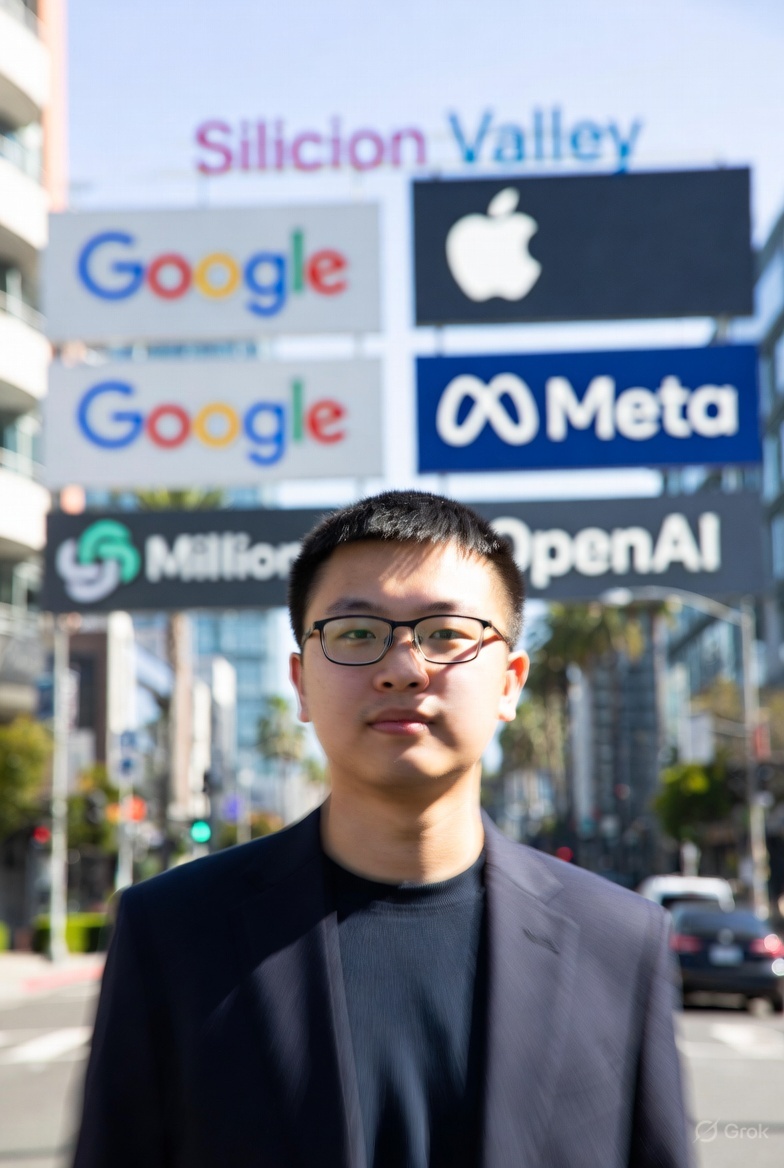
The Nomadic Brain: Ruoming Pang’s Epic Trek Through AI’s Powerhouses Bag’s worth INR 1800 cr compensation package
In the high-stakes world of artificial intelligence, where breakthroughs happen faster than you can say “neural network,” one name is making waves again:
Ruoming Pang. Just today, on February 26, 2026, news broke that OpenAI has snagged this AI luminary from Meta, where he barely unpacked his bags after a seven-month stint. This isn’t just another hire—it’s a testament to the relentless talent shuffle that’s defining the AI era.
Let’s unpack Pang’s remarkable journey and what this move signals for the future of tech.
From Shanghai Roots to Silicon Valley StardomRuoming Pang’s story reads like a tech thriller. Born in Shanghai, China, Pang kicked off his academic odyssey with a bachelor’s in Computer Science from Shanghai Jiao Tong University in 1998. He then crossed the Pacific for a master’s at the University of Southern California in 2000, capping it with a PhD from Princeton University in 2006, focusing on machine learning.
His early career?
A whopping 15 years at Google, where he rose to Principal Software Engineer.At Google, Pang wasn’t just clocking in—he was architecting the future. He contributed to BigTable, Google’s structured storage system that powered over 1,000 internal projects. In 2012, he co-founded Zanzibar, the company’s global authorization system. From 2014 to 2017, he boosted system reliability to an insane 99.999%. And in Google Brain, he co-led the Babelfish/Lingvo deep learning framework, which became a cornerstone for speech recognition and outpaced even DeepMind in TPU usage.
The Great Leap:
Apple, Meta, and Now OpenAIIn 2021, Pang jumped to Apple as a distinguished software engineer, heading the AI Foundational Models team. There, he oversaw over 100 engineers developing models for Siri and on-device features, including the AXLearn training framework and pushes in multimodal AI.
But the plot thickened in July 2025 when Meta poached him with a jaw-dropping compensation package exceeding $200 million over several years. At Meta’s Superintelligence Labs, Pang led AI infrastructure for next-gen models. Fast-forward to now: After months of aggressive courting, he’s off to OpenAI, leaving Meta in the dust. As one X post put it, it’s like a “high-stakes game” in the AI talent wars.
The AI Talent Wars:
A Billion-Dollar BattlefieldThis isn’t isolated drama—it’s symptomatic of a broader frenzy. Silicon Valley giants are throwing fortunes at top talent, with packages that make Wall Street blush. Pang’s moves highlight how fluid expertise is in AI: from Google’s research labs to Apple’s device-centric innovations, Meta’s open-source ambitions, and now OpenAI’s quest for AGI.
It’s a war where brains are the bombs, and companies like Meta are signing $100 billion chip deals just to keep up.On a global scale, Pang’s Chinese origins underscore the international flavor of AI talent. With roots in Asia, his career trajectory shows how expertise flows across borders, fueling innovation but also sparking debates on tech nationalism.
Our Speculation:
What’s Next in the AI Shuffle?
We find this carousel of talent endlessly fascinating. Pang’s expertise in frameworks like Lingvo and AX Learn could turbocharge Open AI’s infrastructure, perhaps accelerating multimodal models or efficient training pipelines.
But will he stay?
In this volatile landscape, loyalty lasts as long as the next nine-figure offer. This hire might tip the scales in Open AI’s favor, but it also exposes the fragility of any single company’s dominance.What does this mean for aspiring AI pros in places like Delhi?
It screams opportunity—global demand is skyrocketing, and borders are blurring. If Pang can hop continents and companies, imagine the paths opening up worldwide.
Thoughts?
Is the talent war sustainable, or headed for a bubble?
@aditya