Newz Quest

From Neighborhoods to Nations: a "NEWS" that speaks your language…

Sunset Serenades and Sunrise Blessings: Discovering the Magic of Chhath Puja


Hey there, fellow wanderers of culture and tradition!

If you’ve ever stood knee-deep in a river at dawn, basket in hand, whispering prayers to the rising sun, then you get it. If not, buckle up—because Chhath Puja is about to sweep you into a world of raw devotion, vibrant colors, and that inexplicable pull of ancient rituals that still feel utterly modern.

As someone who’s chased festivals from the misty hills of the Northeast to the bustling streets of Mumbai, Chhath stands out like a golden ray in a sea of candlelit ceremonies. It’s not just a festival; it’s a love letter to the sun, the ultimate life-giver. And get this: it’s the only puja where we honor the visible Sun God directly—no idols, no intermediaries—just you, the sky, and that life-affirming glow.

Oh, and sunset? Yeah, we worship that too, because why choose between beginnings and endings when you can embrace the full cycle?


Today, as we dive into this Bihar-born beauty (with ripples across Jharkhand, Uttar Pradesh, and even Nepal), I’ll unpack what Chhath is all about, trace its sun-kissed origins, and chat about how this humble harvest fest pumps life (and rupees) into local economies.

Whether you’re prepping for this year’s celebrations or just curious about India’s unsung gems, let’s soak it all in—like a perfect arghya offering.


What Exactly is Chhath Puja? A Four-Day Dance with the Divine
Picture this: It’s Kartik Shukla Shashthi (usually mid-October to early November), and the air hums with anticipation.

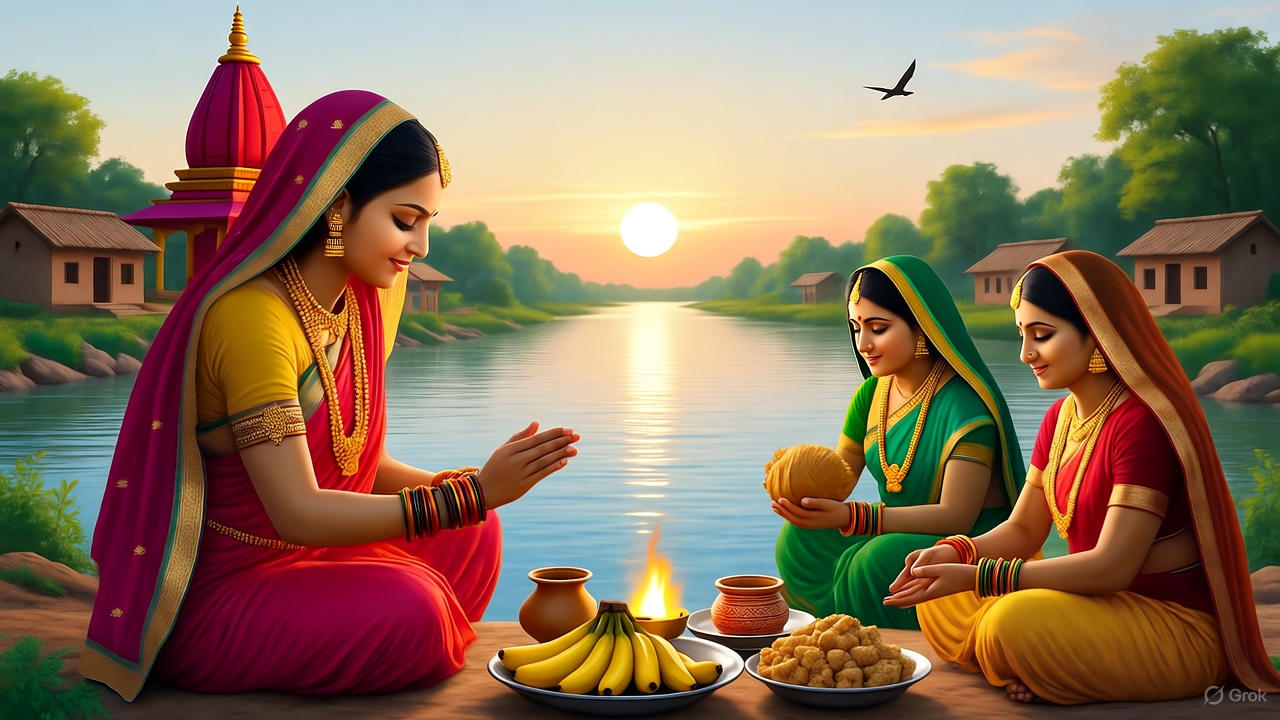
Chhath Puja unfolds over four immersive days, centered on rigorous fasts, folk songs that tug at your heartstrings, and offerings to Surya Dev (the Sun God) and Chhathi Maiya (the sixth sister, a nurturing maternal figure).

Women lead the charge, vowing 36-hour waterless fasts for family prosperity, health, and harmony. But it’s communal magic—ghats (riverbanks) transform into open-air sanctuaries where castes dissolve, and everyone from farmers to city slickers gathers under the same amber sky.


What makes it one-of-a-kind? It’s the pioneer puja for a “visible god.” No temple walls here; devotees stand in shimmering waters, eyes locked on the sun, offering arghya (sacred water tributes) with seasonal fruits, jaggery sweets, and the iconic thekua (those crispy, wheat-jaggery discs that taste like childhood).

And the sunset twist? On day three, as the sun dips into the horizon, we bid it a reverent adieu—symbolizing life’s inevitable close and the promise of renewal. Then, at crack-of-dawn on day four, we welcome it back with open arms. It’s poetic, isn’t it? A reminder that every end is just a setup for a fresh start.


Eco-warriors, take note: Chhath is zero-waste royalty. Bamboo baskets, fresh produce, and handmade sweets—no plastics, no fuss. It’s a breath of fresh air in our throwaway world, promoting sustainability long before it was trendy.


Roots in the River: The Ancient Origins of Chhath
Chhath isn’t some flashy import; it’s woven into the fabric of Vedic India, popping up in the Rigveda where the sun is hailed as the cosmic powerhouse fueling all life.

Fast-forward to epics: In the Mahabharata, Karna—yes, that tragic hero—hones his archery skills through brutal sun tapasya, crediting Chhath for his strength. The Ramayana chimes in too, with Sita observing the fast during her forest exile, seeking blessings for resilience.


Born in the sun-baked farmlands of eastern India (think Bihar’s Gangetic plains and Uttar Pradesh’s rural heartlands), Chhath sprouted from agrarian roots. Farmers, dependent on solar cycles for bountiful harvests, turned gratitude into ritual.

Over centuries, it migrated with communities—to Jharkhand’s hills, Nepal’s Terai, and even urban diasporas in Delhi and beyond. “Chhath” nods to the sixth day of the lunar fortnight, but it’s really about Chhathi Maiya, the benevolent sister who wards off the evil eye and showers prosperity.

Legends swirl around figures like Draupadi and Kunti too, their sun vows inspiring generations of women to fast with fierce determination.


In a nutshell? Chhath is as old as the Vedas, as epic as the Ramayana, and as local as a village ghat at twilight. It’s history you can feel in the mud under your feet.


Rituals That Bind: A Day-by-Day Guide to Chhath Devotion


Ready to ritual-dive?

Here’s the breakdown, minus the spoilers for your first live experience:


Nahay-Khay (Day 1: Bath and Feast): Kick off with a purifying dip in holy waters. It’s “cleanse and savor”—think simple veg meals with pumpkin and lentils. The cleanse isn’t just physical; it’s a mindset reset.


Kharna (Day 2: The Sweet Vow): Evening brings the first fast. Gur (jaggery) kheer is prepped and shared, but the real stars are the women kicking off their 36-hour nirjala (no water) vrata. Pro tip: Hydrate before—this one’s intense!


Sandhya Arghya (Day 3: Sunset Surrender): The heart-stopper. At dusk, families flock to the river. Women, draped in vibrant sarees, balance daura (bamboo trays) laden with bananas, apples, sugarcane, and thekua. Standing waist-deep, they offer arghya to the setting sun amid chants of “Ho Chhathi Maiya!” Fireflies dance, and the horizon blushes pink—pure poetry.


Usha Arghya (Day 4: Dawn’s Embrace): The grand finale. Pre-dawn vigil, then arghya to the rising sun. Fasts break with prasadam—fruits and sweets distributed with glee. Relief washes over like the morning light.


Folk tunes fill the air: “Surya ko pranam, Chhathi Maiya ki jai!” It’s not scripted; it’s soul-stirring improvisation.


Sunshine Economics: How Chhath Fuels Bihar’s Heartbeat
Beyond the spiritual high, Chhath is an economic powerhouse—quietly, unassumingly so.

In Bihar alone, it sparks over ₹5,000 crore in trade annually. Local markets explode with thekua stalls (women-led micro-enterprises churning out thousands daily), fruit vendors hawking seasonal bounty, and bamboo artisans crafting those iconic trays. Jaggery prices spike, farmers smile, and street food scenes (hello, aloo chat on the ghat) thrive.


Tourism gets a solar boost too—Patna’s Gandhi Ghat, Bhagalpur’s Vikramshila, Vaishali’s ancient vibes draw lakhs of pilgrims. Hotels fill, autos hum, and homestays in rural pockets offer authentic peeks into village life.

For migrant Biharis in metros, it’s a cultural homecoming that juices up urban economies via remittances and pop-up markets.
Globally?

As Chhath goes viral on Insta (those sunset reels!), it spotlights Bihar’s crafts—handwoven sarees, Madhubani art—turning tradition into exports. It’s grassroots GDP: empowering women, sustaining crafts, and proving festivals can be force multipliers for growth.

Wrapping Up with a Ray of Hope
As the sun sets on our Chhath chat (pun intended), I’m left humbled by this festival’s blend of grit, grace, and glow. In a world racing toward burnout, Chhath whispers: Pause. Offer. Renew. Whether you’re fasting by the Ganga or just vibing from afar, let it remind you of the sun’s quiet gifts—vitamin D for bones, unity for souls, and a harvest of joy.

This year, why not try a mini-ritual?

Gaze at a sunset, share a sweet, and tag a friend in the comments below—what’s your favorite festival memory? Drop it; let’s keep the conversation sunny. Jai Surya! Jai Chhathi Maiya!


What’s your take on Chhath?

Ever witnessed it live? Share in the comments—I read every one! If this sparked joy, hit subscribe for more cultural deep-dives. 

@Parashar


Discover more from Newz Quest

Subscribe to get the latest posts sent to your email.

Translate »

Discover more from Newz Quest

Subscribe now to keep reading and get access to the full archive.

Continue reading