


Stress Is Not Always “Just Stress”: 8 Signs Your Body May Be Asking You to Slow Down
August 29, 2026 | by Bossprp
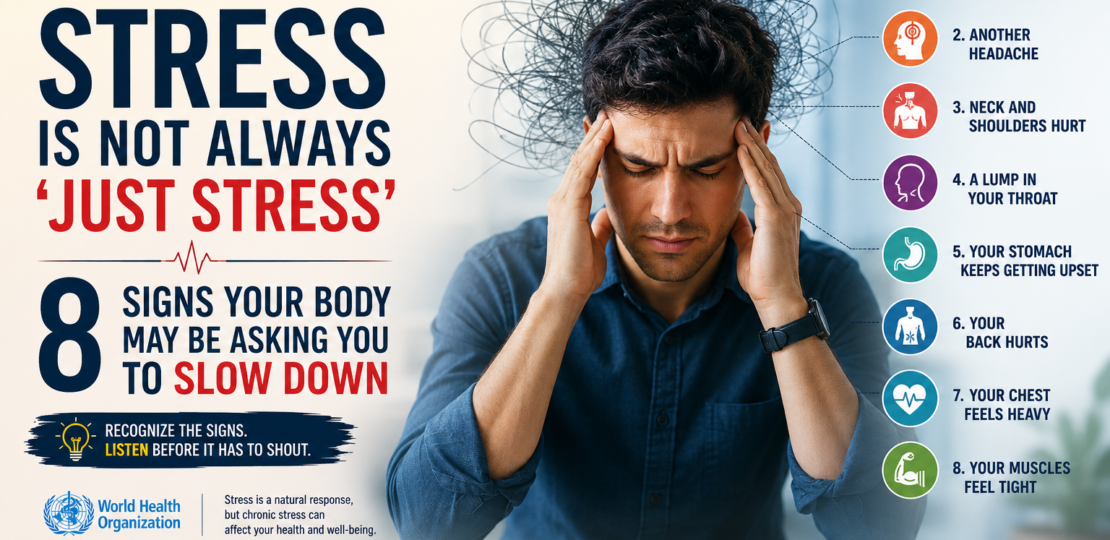
You say, “I’m fine.”
Your body says, “Are you sure?”
A headache that keeps returning.
A tight neck and shoulders.
A stomach that suddenly feels upset.
A lump in your throat.
Muscles that never seem to relax.
Sometimes, the problem isn’t that you’re “too sensitive.”
It may be your body responding to prolonged stress.
The World Health Organization (WHO) explains that stress is a natural response to difficult situations—but excessive or persistent stress can affect both mental and physical well-being.
8 Signs of Stress You Shouldn’t Simply Ignore
The signs of stress aren’t always emotional. Your body can speak before your mind admits that something is wrong.
1. You don’t feel hungry
Stress can change your appetite. You may lose interest in food—or, conversely, start eating more than usual.
Your appetite may be telling a story your words aren’t.
2. Another headache
Recurring headaches can accompany stress, particularly when tension builds up.
But don’t automatically assume every headache is stress-related. Persistent or unusual headaches deserve proper medical attention.
3. Your neck and shoulders hurt
Ever noticed your shoulders creeping upward when you’re under pressure?
Stress can contribute to muscle tension and body pain.
4. A lump in your throat
That strange sensation of having something stuck in your throat can occur during periods of stress or anxiety.
Sometimes, the body carries emotions that the mind hasn’t processed.
5. Your stomach keeps getting upset
Stress can affect digestion and may be associated with stomach discomfort or other digestive symptoms.
That “upset stomach” may not always be about what you ate.
6. Your back hurts
Stress can contribute to physical tension and body aches. If you’re constantly carrying pressure mentally, your body may also feel the load.
Invisible pressure can create very real physical discomfort.
7. Your chest feels heavy
This is one symptom that deserves particular caution.
Stress can produce physical sensations, but chest heaviness or chest pain should never automatically be dismissed as stress, especially if it is severe, new, persistent, or accompanied by breathlessness, sweating, fainting, nausea, or pain spreading to the arm, jaw or back. Seek urgent medical care when appropriate.
8. Your muscles feel unusually tight
A body that never seems to “switch off” may be experiencing sustained tension.
WHO notes that stress can be associated with headaches, body pains, upset stomach, sleep difficulties and appetite changes.
The Bigger Warning Sign: You Stop Feeling Like Yourself
Stress doesn’t always announce itself with a dramatic breakdown.
Sometimes it looks like:
“I don’t feel like talking.”
“I can’t concentrate.”
“I’m tired even after sleeping.”
“Everything irritates me.”
“I just want everyone to leave me alone.”
WHO notes that stress can make it difficult to relax and concentrate and can be accompanied by anxiety and irritability.
And that’s why recognising the early signals matters.
So, What Can You Do?
The answer isn’t necessarily to eliminate every stressful situation.
The goal is to learn how to respond to stress before it starts running your life.
WHO recommends practical approaches including maintaining a daily routine, getting enough sleep, staying physically active, eating regularly and healthily, connecting with people you trust, and limiting exposure to news or social media when it increases your stress.
Even a few minutes of practising stress-management techniques can be useful. WHO’s “Doing What Matters in Times of Stress” guide provides practical self-help techniques for coping with stress.
One Last Thought
We often take care of our phones when their battery reaches 10%.
We plug them in.
We give them a break.
We stop demanding more from them.
But when our own battery reaches 10%, we often demand more.
One more meeting.
One more deadline.
One more problem.
One more sleepless night.
Maybe it’s time to recognise the warning signs.
**Your body isn’t always complaining.
Sometimes, it’s communicating.**
Listen before it has to shout.
RELATED POSTS
View all


इंस्टाग्राम का नया फ़ीचर: ‘Your Algorithm’ से यूज़र तय करेंगे अपनी फ़ीड
July 30, 2026 | by Arjun Mehta
President Murmu to Join 12th National Handloom Day in New Delhi
August 2, 2026 | by Rajesh Singh

Iran Releases Video of Mojtaba Khamenei Amid Health Speculation
August 10, 2026 | by Anjali Deshmukh