Updated 8 जुलाई 2026 12:02 अपराह्न
The Unlikely Start of a Revolutionary Mind
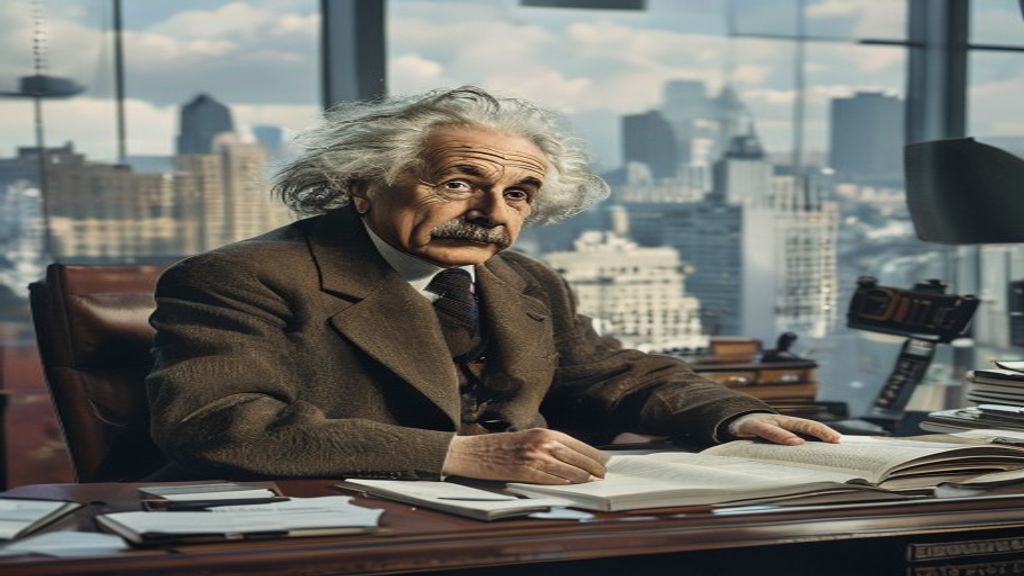
Albert Einstein’s story begins not in a laboratory, but in a lecture hall at ETH Zurich in October 1896. At just 17 years old, he enrolled in one of Europe’s most prestigious technical universities, a decision that would challenge everything he thought he knew about academic conformity.
An Outlier Among Peers
From his first days at ETH, Einstein stood apart. While his classmates embraced traditional approaches to science, he questioned the very foundations of their teachings. His professors noted his restless curiosity and his tendency to challenge lectures with unconventional questions.
- Rejected rigid academic structures in favor of independent thought
- Spent hours sketching thought experiments instead of attending classes
- Criticized the rote memorization culture prevalent in German education
Reflections on a Formative Years
Decades later, Einstein looked back on his university years with striking candor. In private letters and interviews, he described his time at ETH as both frustrating and liberating. The institution’s emphasis on practical engineering clashed with his passion for abstract philosophical inquiry.</n
“I felt like a vagabond among my fellow students,” he once wrote. “Their world was one of measurements and calculations. Mine was one of imagination and wonder.” This tension between practicality and theory would define his career.
The Seeds of Genius
What made Einstein different? His professors observed that he possessed an extraordinary ability to visualize complex concepts. While others saw equations as tools for problem-solving, Einstein perceived them as windows into the universe’s hidden mechanisms.</n
This unique perspective led to conflicts. His habit of skipping classes to contemplate physics problems earned him reprimands. Yet it also fostered the mental discipline that would later fuel his groundbreaking work on relativity.
From Campus to Cosmos
Einstein’s academic struggles at ETH did not hinder his brilliance; they refined it. The university’s rigid structure inadvertently pushed him toward self-directed learning. He devoured works by Maxwell, Hertz, and Planck, often reading by candlelight after midnight.</n
These formative years taught him a crucial lesson: true innovation requires breaking rules. When he submitted his revolutionary 1905 papers—on photoelectric effect, Brownian motion, and special relativity—he was applying the same rebellious curiosity that set him apart in Zurich.
Why This Matters Today
Einstein’s journey reminds us that genius often wears the mask of nonconformity. His story challenges the myth that academic success requires fitting into predefined molds. In an era obsessed with standardized metrics, his legacy suggests that true innovation emerges from embracing one’s differences.</n
Today, educators worldwide study his experience to rethink how they nurture young minds. The “vagabond” student who roamed the halls of ETH became the architect of our modern understanding of space, time, and energy.
Legacy of a Reluctant Genius
From a teenager who felt out of place in a Swiss classroom to a Nobel laureate who reshaped physics, Einstein’s path proves that greatness often begins with discomfort. His university years were not a failure—they were the crucible that forged a scientific revolution.
लेखक के बारे में

Related Stories



अब फैशन में है
- Handwritten Letters Return as Bhartiya Mall of Bengaluru Hosts Stamps & Stories Festival – Prittle Prattle News
- 'विधायक जी दया करो, हमारा मकान बनवा दो', 5 साल के मासूम की गुहार
- खामेनेई की अंतिम सलामी से ठीक पहले ईरान ने दी जंग की धमकी! तेहरान बोला- शांति समझौते का नहीं…
- West Bengal: TMC नेता शौकत मोल्ला के बेटे के कैफे पर बुलडोजर एक्शन, सरकारी जमीन पर अतिक्रमण का आरोप
- ‘गाजा पर चुप्पी समझ से परे’: सोनिया गांधी ने सरकार को घेरा, बोलीं- भारत अपने पुराने सहयोगियो…