


Flower and Fruit Prices Surge Ahead of Bengaluru’s Varamahalakshi Festival
August 22, 2026 | by Fatima Khan
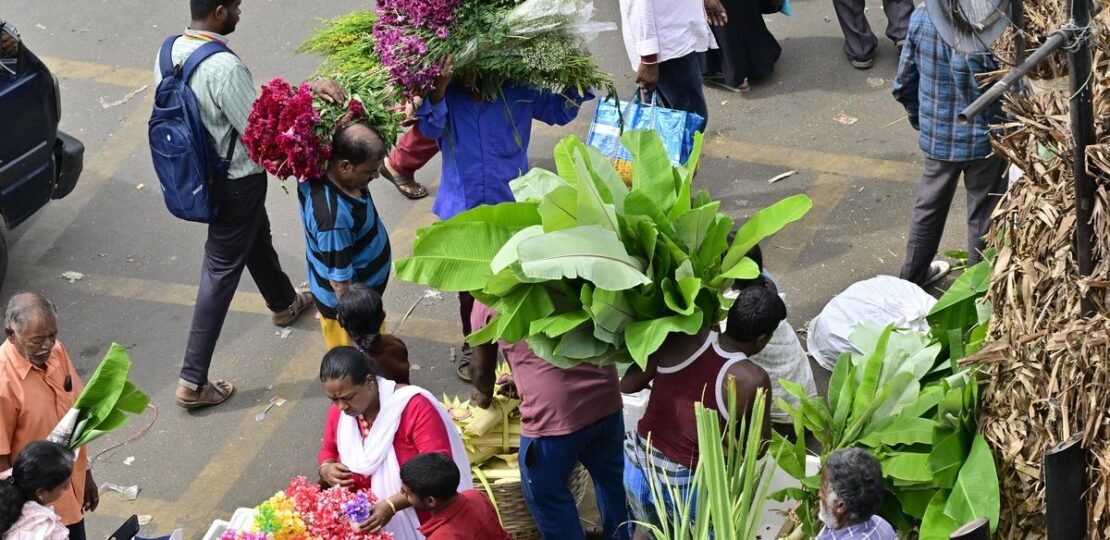
Stalls at K.R. Market are awash with bright chrysanthemums and fragrant jasmine, but the price tags tell a different story. Chrysanthemums now fetch between ₹200 and ₹400 per kilogram, roses hover around ₹300, while jasmine (mallige) commands ₹500‑₹800 per kilogram. The rare kanakambara blooms have spiked to a staggering ₹3,000 per kilogram, prompting both excitement and anxiety among sellers.
Fruit vendors report a parallel rise, with seasonal produce such as mangoes and bananas climbing noticeably as the Varamahalakshi festival approaches. The surge reflects heightened demand for decorative and ceremonial items, yet the windfall appears to bypass the farmers who cultivated these goods.
Details
- Chrysanthemum prices: ₹200‑₹400/kg
- Rose prices: ₹300/kg
- Jasmine (mallige) prices: ₹500‑₹800/kg
- Kanakambara prices: ₹3,000/kg
- Fruit prices have also risen sharply, though exact figures vary by variety
- Middlemen in mandis report higher margins, while growers see limited benefit
Quotes
G.M. Diwakar, a member of the K.R. Market Flower Merchants Association, explained the price dynamics: “Chrysanthemums are priced between ₹200 and ₹400 per kg, roses at ₹300 per kg, mallige at ₹500 to ₹800 per kg, and kanakambara at ₹3,000 per kg.”
A local flower vendor added, “Farmers are not really benefiting from these prices. It is the middlemen in the mandis who are benefiting from the rise in market prices.”
Background
The Varamahalakshmi (Varamahalakshi) festival, celebrated annually in Bengaluru, draws thousands of devotees who adorn temples and homes with fresh flowers and fruits. Historically, the event provides a seasonal boost for horticultural producers across Karnataka. However, the supply chain has long been dominated by intermediaries who purchase produce at wholesale markets (mandis) and sell at higher retail rates during festival peaks.
In recent years, rising input costs for growers—such as seeds, fertilizers, and labor—have squeezed profit margins. While festival demand spikes, the price advantage often accrues to traders who control distribution, leaving many smallholder farmers with marginal gains.
Conclusion
The current price surge underscores a recurring challenge: ensuring that the economic uplift from cultural celebrations reaches the primary producers. As Bengaluru’s streets fill with vibrant blossoms and sweet fruits, policymakers and market regulators may need to revisit mandi pricing structures to create a more equitable flow of revenue. For now, the festival’s visual splendor masks an underlying disparity that could shape future discussions on agricultural market reforms.

RELATED POSTS
View all



Cci Approves Acquisition of Additional Shareholding of Acko Technology & Services Pvt Ltd. B…
August 22, 2026 | by Fatima Khan

Karnataka Mla Munirathna Gets Anticipatory Bail
September 16, 2026 | by Kenji Tanaka